


Despite drop in acreage, asparagus still being grown
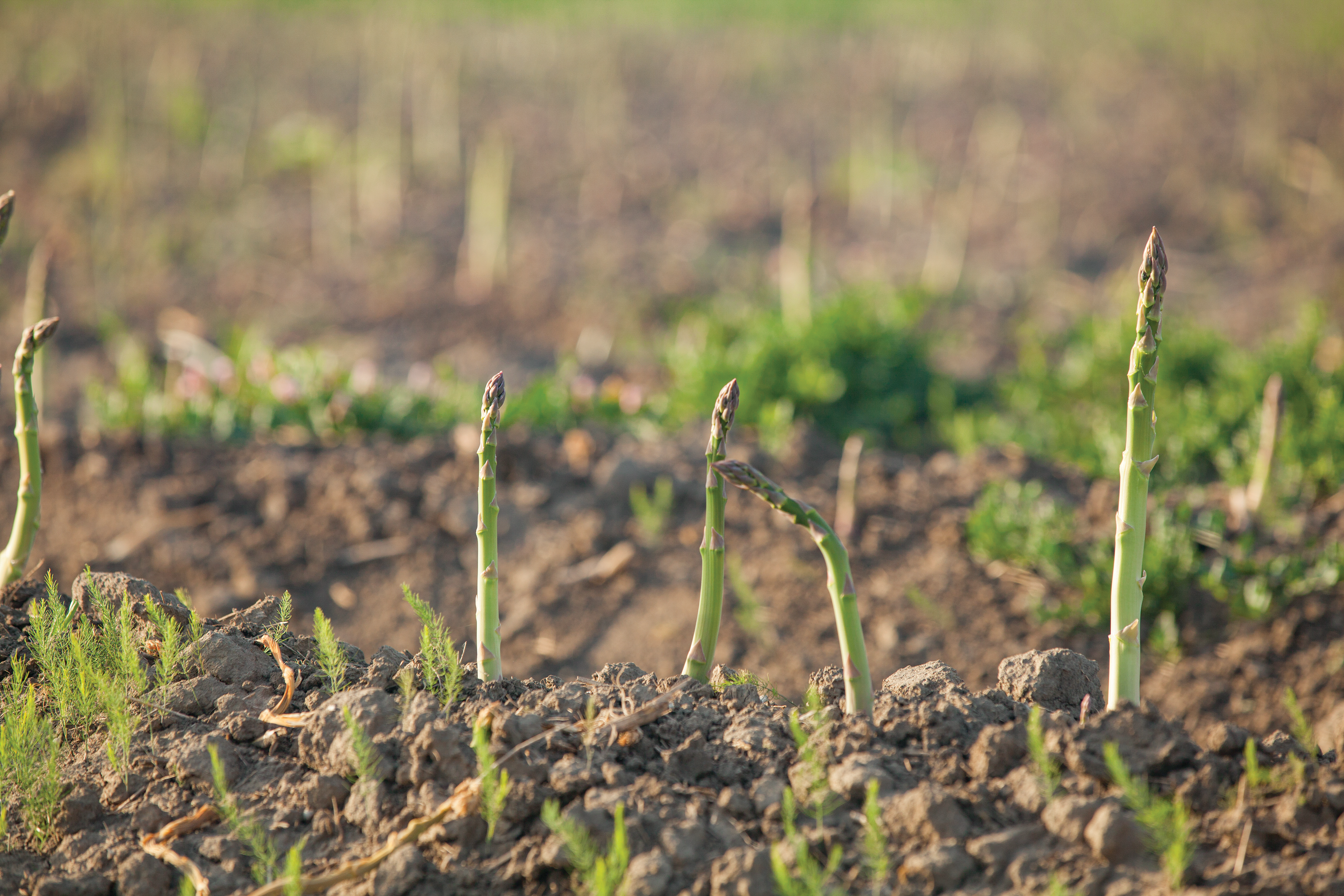
California asparagus production has diminished through the years due to competition from Mexico and expensive labor costs to harvest the crop. But some growers have maintained limited acreage of the spring vegetable.


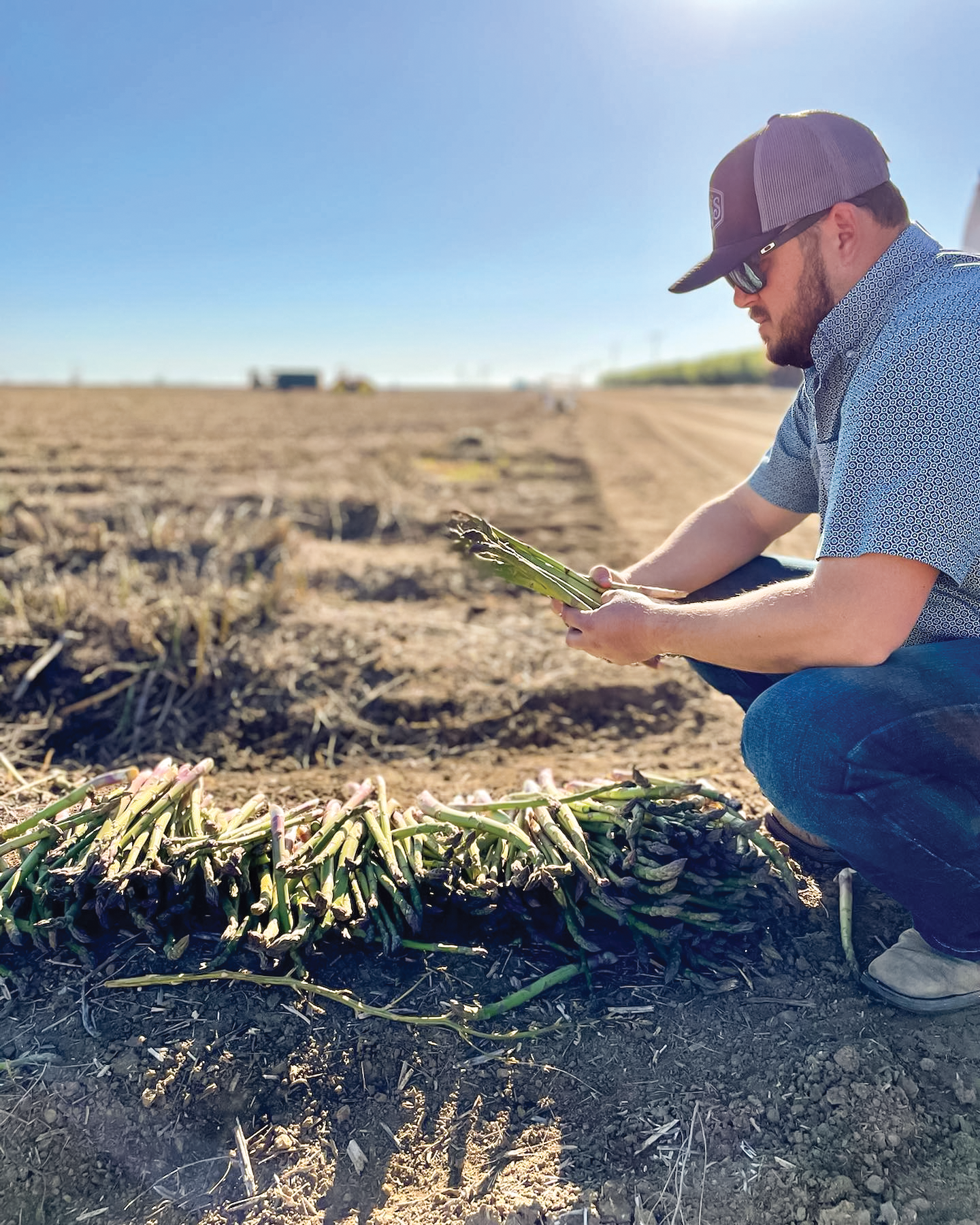
Photo/Courtesy A-Bar Ag Enterprises
By Nancy Vigran
Not so long ago, there were thousands of acres of asparagus planted in the San Joaquin River Delta. These days, only one or two growers with perhaps 100 to 200 acres remain in production there, said Brenna Aegerter, University of California Cooperative farm advisor in San Joaquin County.
What changed? California growers simply “cannot compete with Mexico,” Aegerter said. Asparagus as a crop is not necessarily expensive to grow, she said, but the cost of labor to harvest it is huge.
Aegerter cited a study indicating labor accounts for about 80% of California costs. Over time, she said, California farmers scrambled to plant alternative crops.
With Mexico being the largest supplier of the vegetable for the U.S., the California Asparagus Commission ended its marketing activities in 2019. California had a peak 36,000 acres of asparagus in 1999, and acreage dropped from 22,500 in 2006 to 2,800 in 2021, according to the California Department of Food and Agriculture.
But these days, remaining asparagus growers, including Jim Durst of Durst Organic Growers in Esparto, stand by the crop’s place in California.
Durst, who has about 150 acres dedicated to asparagus, said “we’ve pretty much sold out” what his farm has harvested since April 1. In some ways, Durst said, the storms earlier in the year helped him by delaying the start of harvest.
“We probably would have gotten clobbered,” he said, citing vast quantities of the product coming in from Mexico at the time. Later, his farm began harvesting seven days a week. Durst said he didn’t expect a slowdown until hotter temperatures arrive.
In mid-April, it was already hot in Mexico, he said, and “the quality suffered,” even though imports and sales of Mexican asparagus continued. But Durst said his customers are accustomed to the quality of domestic asparagus, and that translates to higher demand for his crop compared to competing products from south of the border.
Even on its limited scale, California asparagus production accounted for 30.6% of U.S. asparagus receipts in 2021, according to CDFA. Even though acreage was smaller in 2021 than in 2020, the state’s asparagus production rose by 21%.
Still, Durst said his farm grows half of the 300 acres of asparagus it used to. His operation sells nationally, but he said he prefers to target the West Coast.
He said he is looking to add another 35 to 40 acres this year, with new emphasis on purple asparagus. He may idle an equal amount of older fields, he said.
“Purple asparagus is a good crop this year,” Durst said. “It is not quite as productive as green, but it costs the same amount to grow, and the price is 30% higher.”
He said purple asparagus “sells well in the food service industry as it is attractive on the plate.”
Durst said he keeps growing asparagus for a simple reason: He has all the equipment and the packaging for it, so it makes sense to continue. Also, he is banking on an improving market and said he doesn’t want to start all over should demand for locally grown asparagus rise.
“Who knows how the world is going to change in the next few years,” he said.
In Firebaugh, Fresno County, A-Bar Ag Enterprises started harvesting asparagus about three weeks later than usual this year and is cutting every day, said co-owner Jake Barcellos.
A-Bar Ag has been growing asparagus for about 12 years. While Barcellos is also wary of competition from farms in Mexico with lower labor costs, he is bullish on the caliber of local asparagus and touts it as California grown in his marketing.
“Our quality is what we hang our hat on,” Barcellos said.
Like Durst Organic Growers, A-Bar Ag dedicates a small amount, about 5 acres of its 226 asparagus acres to a purple variety. For now, Barcellos said, it remains a variety with niche demand for customers.
Generally, A-Bar Ag annually fills about 250 28-pound boxes of asparagus per acre from a mature field. The ranch has one younger field generating about 150 boxes of the same weight.
Just how long the operation will keep harvesting depends upon the demand, the box count per acre and whether heat causes the asparagus to fern out, diminishing quality.
A-Bar Ag partners with Turlock Fruit Co. in the asparagus business. Don Smith, owner of the packer and marketer, said Fresno County has become the biggest asparagus-producing region in the state.
“If that doesn’t sound ridiculous, it is,” Smith said, noting that 25 years ago San Joaquin County was the county flourishing with asparagus fields.
Beyond water issues and the weather, Smith said thrips are the largest challenge when growing asparagus. As the weather warms, thrips can come out.
“They don’t contaminate it, but they do scar the shaft,” he said, “and it looks terrible.”
Smith agrees it is reasonable to plant purple asparagus, and Turlock Fruit produces a very limited amount.
(Nancy Vigran is a reporter based in Placer County. She may be contacted via news@cfbf.com.)





.svg.png)
