


Supplies of dairy heifers shrink as more bred to beef


By Ching Lee
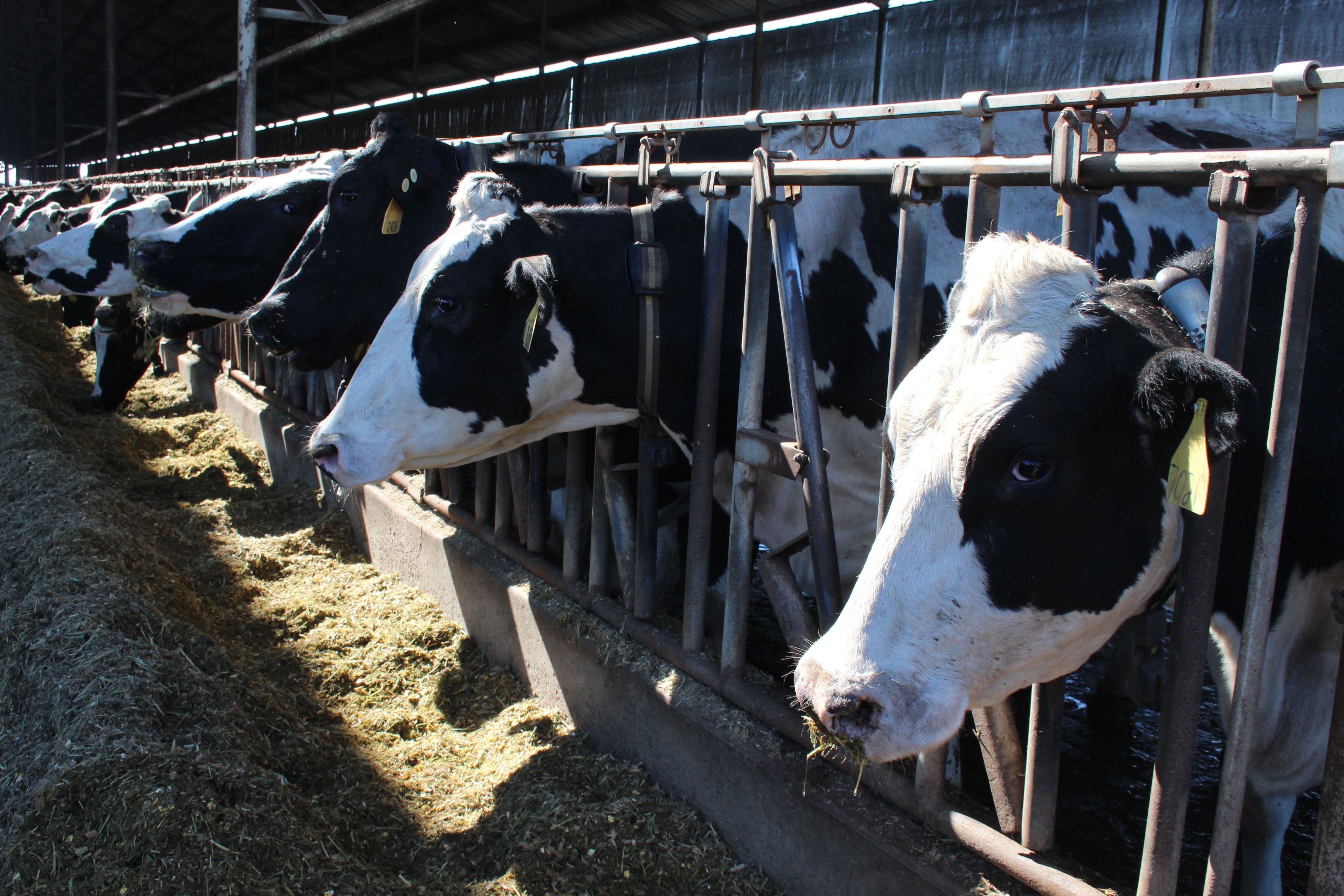
Dairy farmers looking to buy young heifers to replace their older milking cows should get used to the sticker shock for a while, as the nation’s dairy heifer inventory has plummeted to a 20-year low.
Reduced supplies of dairy heifers could limit the nation’s ability to produce more milk, people in the industry say, and reversing the trend will take at least two to three years. How soon dairy farmers respond will depend on market conditions—for milk and for beef.
U.S. dairy replacement heifers have dwindled because dairy farmers have turned to breeding more of their dairy cows with beef genetics. The move is driven by the rising cost of raising dairy replacement heifers, reduced milk checks and record-high beef prices.
“You’re carrying this inventory that’s a real cash-flow drain,” Tulare County dairy farmer Joey Fernandes said, referring to dairy heifers that are not yet producing milk but still need to be fed and cared for.
With the price of hay and other forages more than doubling during drought years, Fernandes said dairy farmers were not only looking to cut costs but searching for additional revenue streams. During times of contraction, dairy heifers are also not worth much.
“First thing people say is, ‘Man, I can buy them cheaper than I can raise them,’” Fernandes said.
Even though dairy farmers’ main business is producing milk, he said, “we’re really beef people at the same time.” He noted a big part of a dairy’s income has always been from selling cull cows that are retired from the milking herd and male calves, which don’t produce milk—and in more recent years, the so-called “beef-on-dairy” calves.
Adoption of beef genetics has become so integral in the dairy business that some producers have direct contracts with feedlots such as Grimmius Cattle Co. in Hanford and Harris Ranch in Coalinga that buy those animals, said George Gookin, a representative for Cattlemen’s Livestock Market in Galt. The calves are put on feed at around 400 pounds, finish 10 to 12 months later and then sent to slaughter, he said.
Colorado-based CattleFax, which provides research and analysis on the beef industry, estimated some 2.6 million dairy calves born in 2022 were beef crosses, or about 7% of all U.S. cattle sent to slaughter. That’s compared to 1.6 million beef-on-dairy calves in 2020, 410,000 in 2018 and 220,000 in 2016. The organization predicts the growth will continue, with dairy-beef crosses representing 15% of total beef slaughter by 2026.
Mel Gadbut, a cattle broker in Manteca, said he’s working with a dairy farmer who has been breeding 64% of his herd with Angus beef genetics. He noted a Holstein-Angus calf could fetch $600 to $650 “as soon as it hits the ground” versus a pure Holstein calf, which might be worth about $200.
“Right now, the beef market is strong, and that’s really the only saving grace for the dairyman,” he said.
But with tightening dairy heifer supplies, the price of replacements has surged—and Gadbut said he expects prices will go higher yet. Prices haven’t necessarily “taken off like a rocket,” he said, because more dairy farmers are getting out of the business, so some cattle from those dairies are available.
In California, the average price of dairy cow and heifer replacements has actually dropped—from $1,820 a head in January 2023 to $1,750 in January 2024, according to the U.S. Department of Agriculture. California was the only major dairy state that posted a year-over-year decline in price.
Considering the nine months of gestation to produce a calf and nearly two more years to raise that animal to begin producing milk, Gadbut said it will take time to shift the current trajectory on replacements. Dairy farmers may not be inclined to change course too quickly with the strength of the beef market.
“There’s too much money in it,” he said. “It’s going to stay this way as long as (dairy farmers are) making money on their calves.”
Beef prices have climbed to record levels because of a short supply of cattle nationally. Severe drought in major cattle-producing regions in recent years decimated pasture conditions and other feeds, forcing ranchers to sell off livestock.
Before the 2023 storms that broke the state’s drought, Shasta County cattle rancher Jim Rickert said he had no choice but to reduce his herd by 25%. He had run out of feed on the range, and hay was too expensive to buy.
The nation’s low cattle numbers will take time to rebuild, he said, as there are now fewer cows for breeding. Higher production costs may also discourage a rush to expand herds.
“If you have a calf born today, you’ve got more expense for a while, and you don’t have something to sell for about four years,” Rickert said.
At 87.2 million head, the U.S. beef cattle inventory remains at its lowest in 73 years, according to USDA. Cattle numbers will likely decline further this year, Shayle Shagam, a USDA livestock analyst, reported during the department’s annual Agricultural Outlook Forum this month. Commercial beef production is forecast to fall by 3% in 2024, he added.
At his dairy near Tulare, Fernandes said he and his sons decided to raise at least 75% of their own replacement heifers so they can maintain the genetics of their milking herd. They breed the remaining 25% to beef to earn supplemental income.
But he said he knows other dairies that need cash and are “desperate enough” to breed 50% or more to beef. Dairy farmers with Jersey cows, for example, may choose to crossbreed more, he said, because Jersey calves have such low value in the beef market due to their small size.
“These things go in cycles,” he warned. “Sometimes you have to be a contrarian: Let’s not chase this beef thing because if everybody’s doing it, we’re going to be short replacements, and they’re going to be high (priced).”
Gaylor Wright of California Fats and Feeders, a cattle seller and buyer in Oakdale, said he expects the beef cattle market will remain strong for another two years, provided the price of corn and U.S. beef exports remain stable.
He said he also thinks the short supply of dairy replacements may not be “as big a deal as what some people are trying to make out of it.” Because dairy farmers use sexed semen and artificial insemination for breeding, “they can turn around and replace (older milk cows) faster than you might think.”
Such breeding tools also allow them to do “more innovative-type experiments with different genetics,” Wright said. Cattle ranchers do most of their breeding naturally with a live bull on grass and tend to use only beef genetics. Many dairy farmers are breeding Angus-Holstein crosses, but he’s also seen a lot of Jersey and Charolais crosses or Montebeliarde crossed with Holstein or Jersey.
There are other variables aside from genetics that dairy farmers must consider if they want to produce and sell beef-on-dairy calves, he said, including the age of their milking herd and how soon the animals need to be replaced, cattle prices, cost of feed, and market and economic forces.
“If you’re a dairyman and you’re making those decisions,” Wright said, “it’s a decision that’s going to have an impact for two years.”
(Ching Lee is an assistant editor of Ag Alert. She may be contacted at clee@cfbf.com.)





.svg.png)
